Sitting down to work one morning, I lit some incense — and realised that in all the years I’ve carried this Zippo, I had never taken it apart for any reason other than refilling it. That seemed like a Seek & Geek waiting to happen.
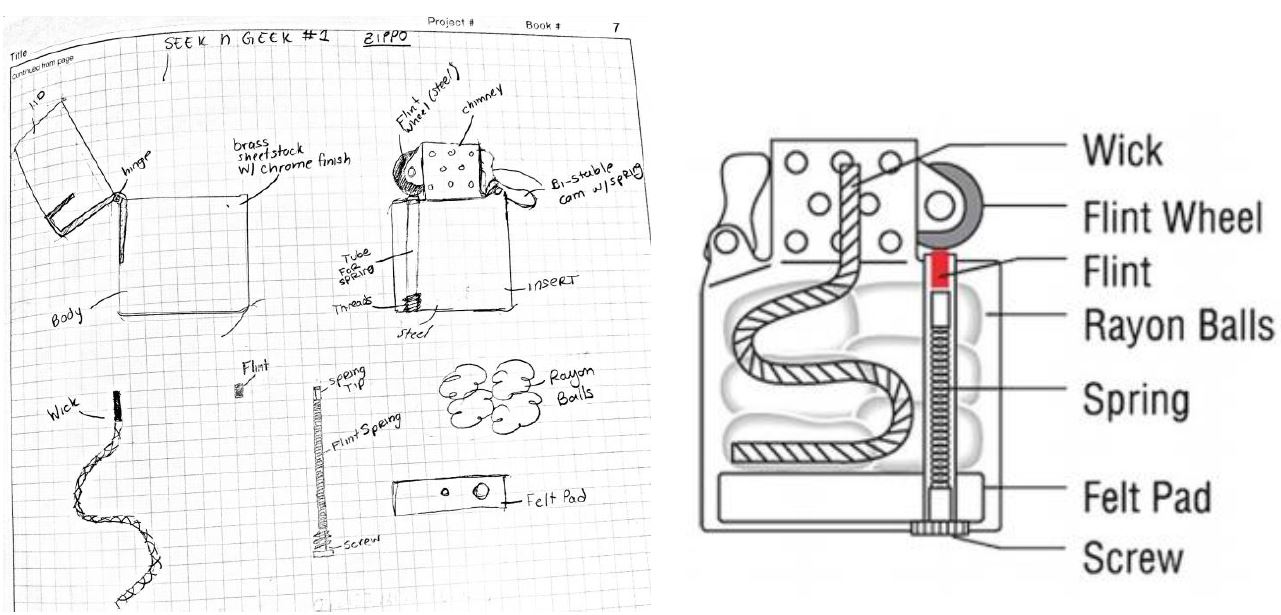
How it actually works
Fuel goes in through a hole under the felt pad and is absorbed by the rayon balls. Capillary action draws it up the wick to the exposed section beside the flint wheel, where it evaporates, so the wick sits in a small cloud of fuel vapour. Run a thumb down the flint wheel and the spring-preloaded flint scrapes tiny pieces off it.
Then the interesting part. Firesteels are steel or a pyrophoric iron alloy such as ferrocerium. Iron exposed to oxygen oxidises — that’s rust — and oxidation is strongly exothermic. We never notice the heat because everyday iron is large: ambient temperature and a big surface area carry the heat away as fast as it appears.
Shave the same metal into specks and the ratio inverts. The freshly exposed surface is enormous relative to the volume of the shaving, so as that surface oxidises there is nowhere for the heat to go. The temperature jumps and the particle emits light and heat — a spark.
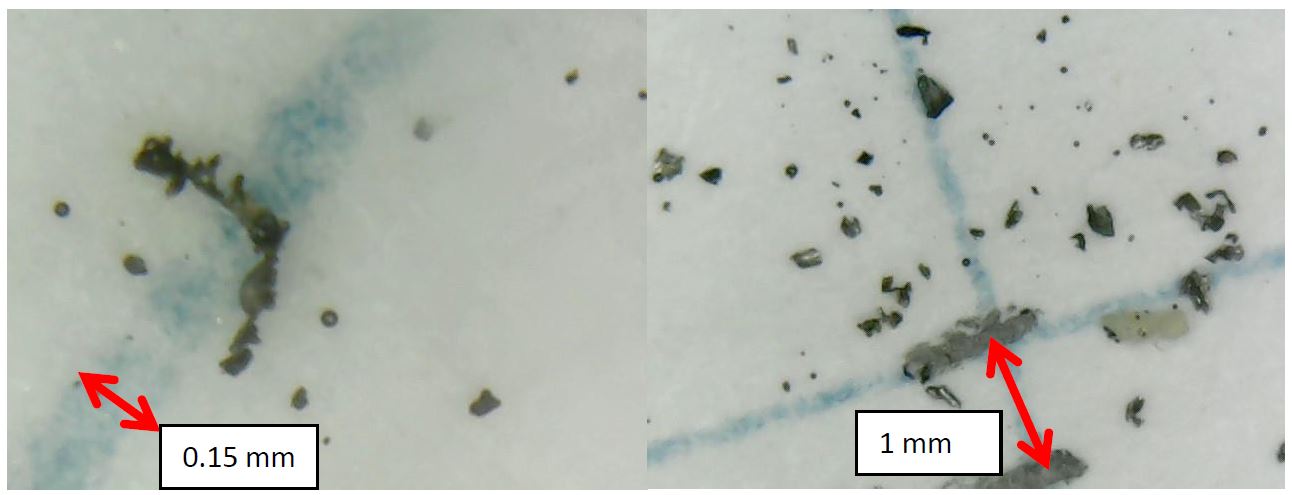
Those sparks ignite the vapour around the wick, capillary action keeps pulling fuel up from the soaked rayon balls, and the flame’s own heat keeps evaporating it into the reaction.
The windproofing is the chimney. It admits just enough airflow around the exposed wick to set up a vortex that holds the flame tip above the chimney’s rim — but not so tall that you burn yourself closing the lid.
Reverse-engineering the requirements
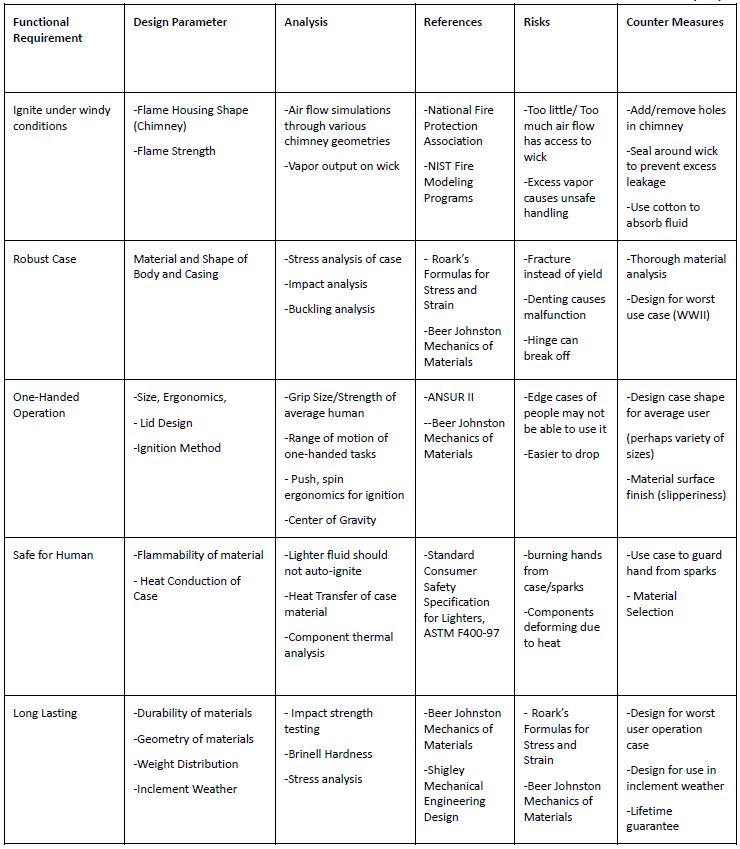
Working backwards from the design, the functional requirements look like:
- Ignite in windy conditions
- Robust case against the hazards of daily life
- One-handed operation
- Safe
- Long lifetime
The case. Stamped brass, nickel-coated, chrome-plated — the nickel is there because chrome won’t adhere to brass directly. Approximating the outer case as a plate with three simply supported edges and one free edge gives a first-order yield estimate.
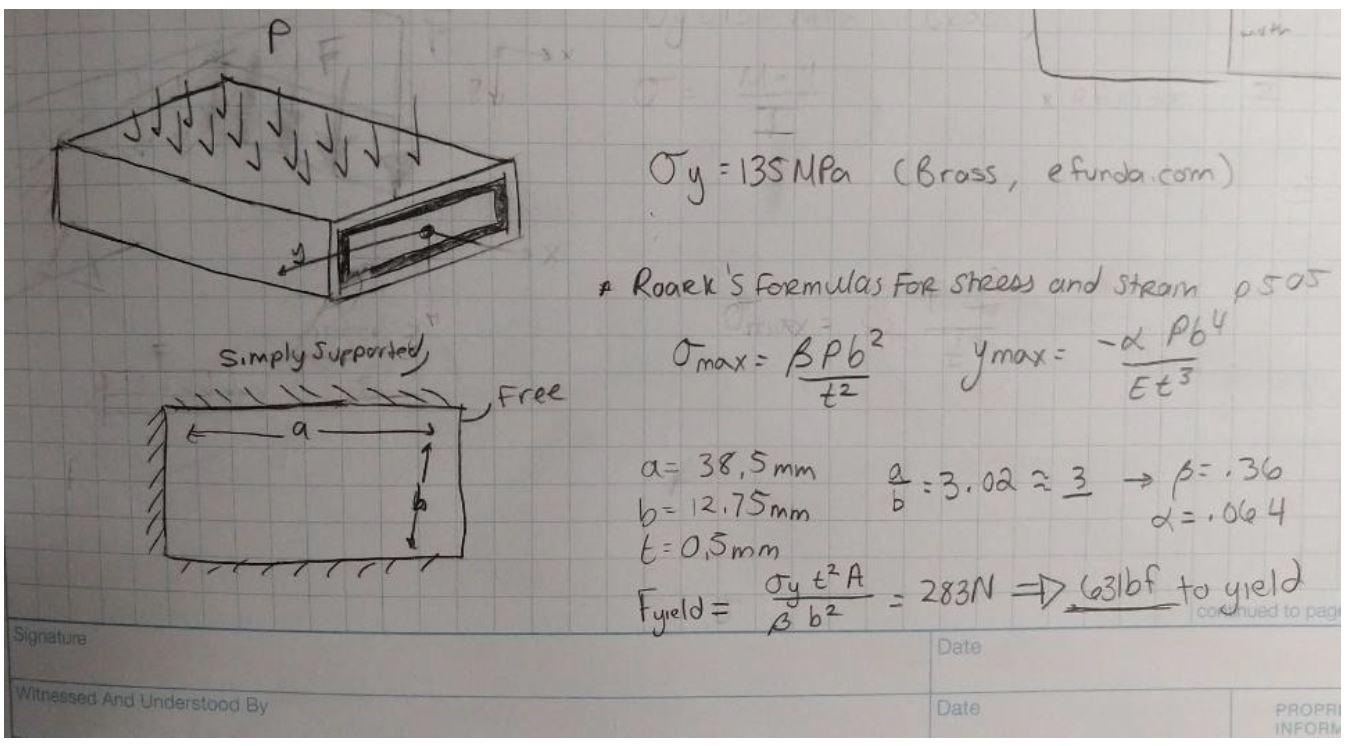
63 lbf to yield — which says the bare case will deform if a normal person sits on it. The calculation ignores the stiffness the insert adds, though, and the insert is what actually prevents it. So I tested it: standing on the case without the insert deformed it, though not beyond repair. Standing on it with the insert in place did not.
The lid. The mechanism I hadn’t noticed in years of use is a bi-stable cam and spring. The cam’s shape plus a spring plate holds the lid both open and closed until the user decides otherwise.
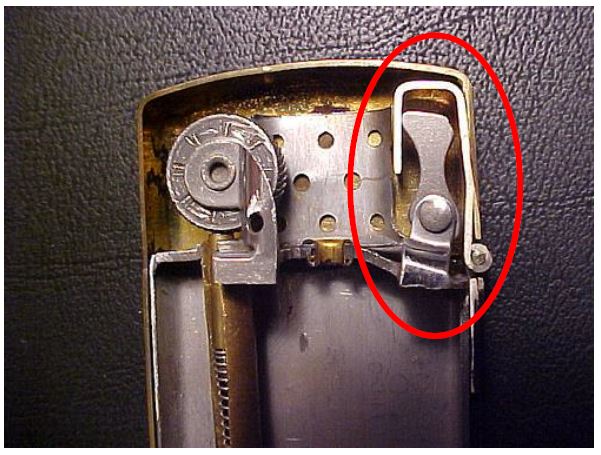
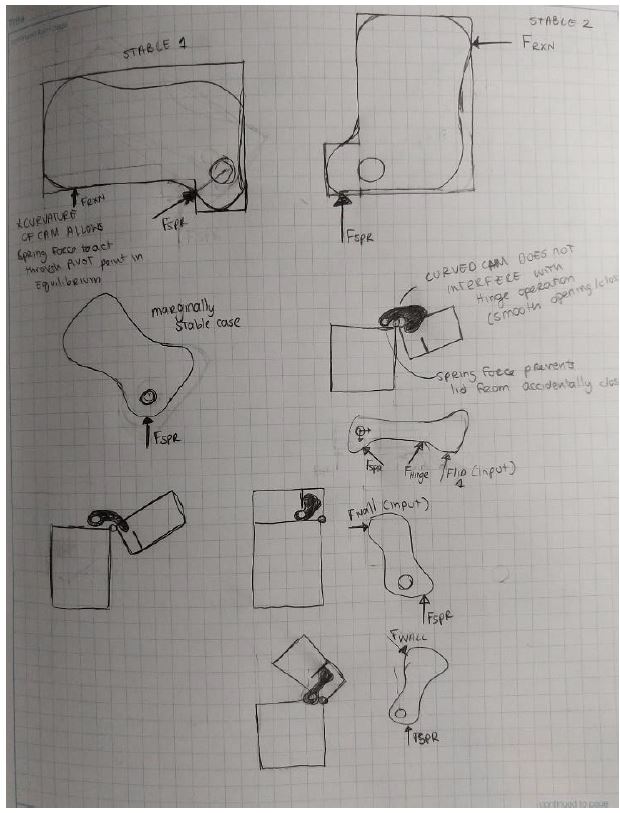
The spring exerts enough torque on the cam about its pivot to stop the lid moving without input. Working the moment balance through the cam and the lid gives the thumb force needed to break it out of a stable position.
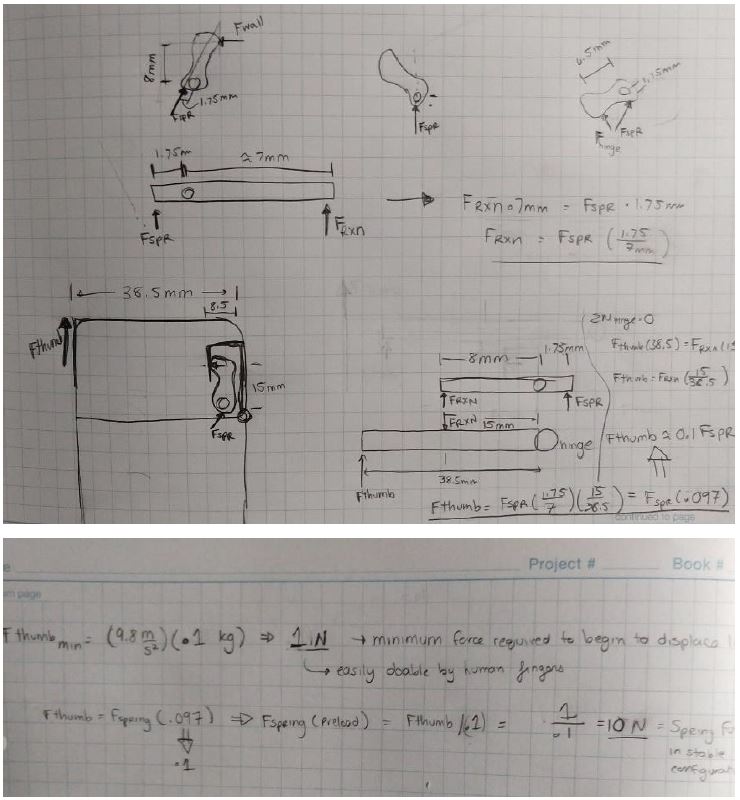
1 N to start the lid moving, from a spring preload of roughly 10 N — comfortably within what an adult can apply with a thumb, which is exactly where you’d want it.
The design process, reconstructed
References
All authentic Zippos are still made in Bradford, Pennsylvania.