I did my doctorate and my master’s in MIT’s d’Arbeloff Laboratory with H. Harry Asada, and my undergraduate thesis at the University of Florida with Anil V. Rao. All three came back to the same problem: how do you get precision out of a machine that isn’t precise on its own?
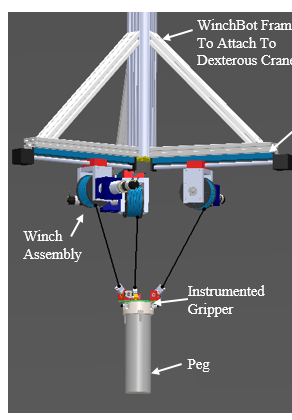
For my PhD, that machine was an overhead crane, which nobody would call accurate, and the job was inserting a heavy shaft into a hole with 120 µm of clearance. Cables go slack under compression, so a multi-cable suspension is deliberately non-rigid in one direction. I used that slack to keep the shaft from being over-constrained as it went in, instead of trying to make the crane itself finer.
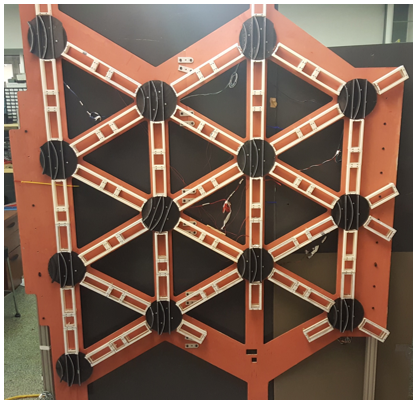
For my master’s, it was a warehouse. Rather than making the lifts faster, I removed each carriage’s dependence on where the other carriages were, which bought a 153% gain in time efficiency over a double standard elevator. The turntable that indexes those carriages is the same idea in miniature: its drive motor leaves 2.54 mm of backlash-induced misalignment, and spring-loaded balls bring that to 0.7 mm worst case without over-constraining the central shaft.
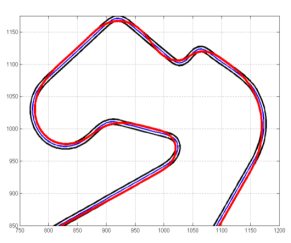
My undergraduate thesis turned a picture of a racetrack into the curvature data an optimal-control solver needs. The lap time it produced for Circuit of the Americas came within 0.13% of the real record.
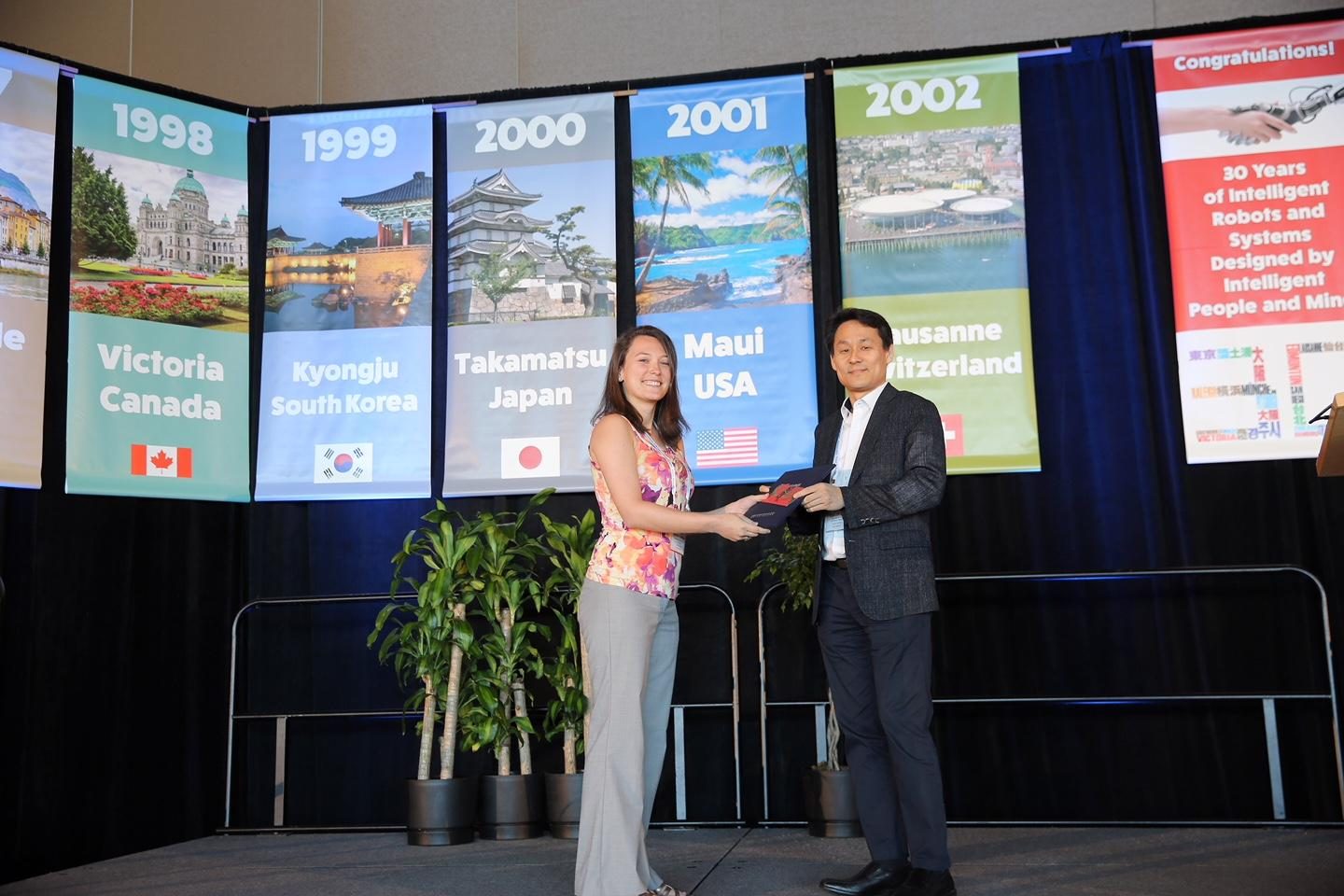
Accepting the Best Application Paper Award at IROS 2017 in Vancouver for “A Multi-Track Elevator System for E-Commerce Fulfillment Centers”, the conference paper from my master’s research.
Sponsored and applied engineering work, including the RAWHIDE twin-arm project with QinetiQ North America, Raytheon and the ARM Institute, is under Projects.