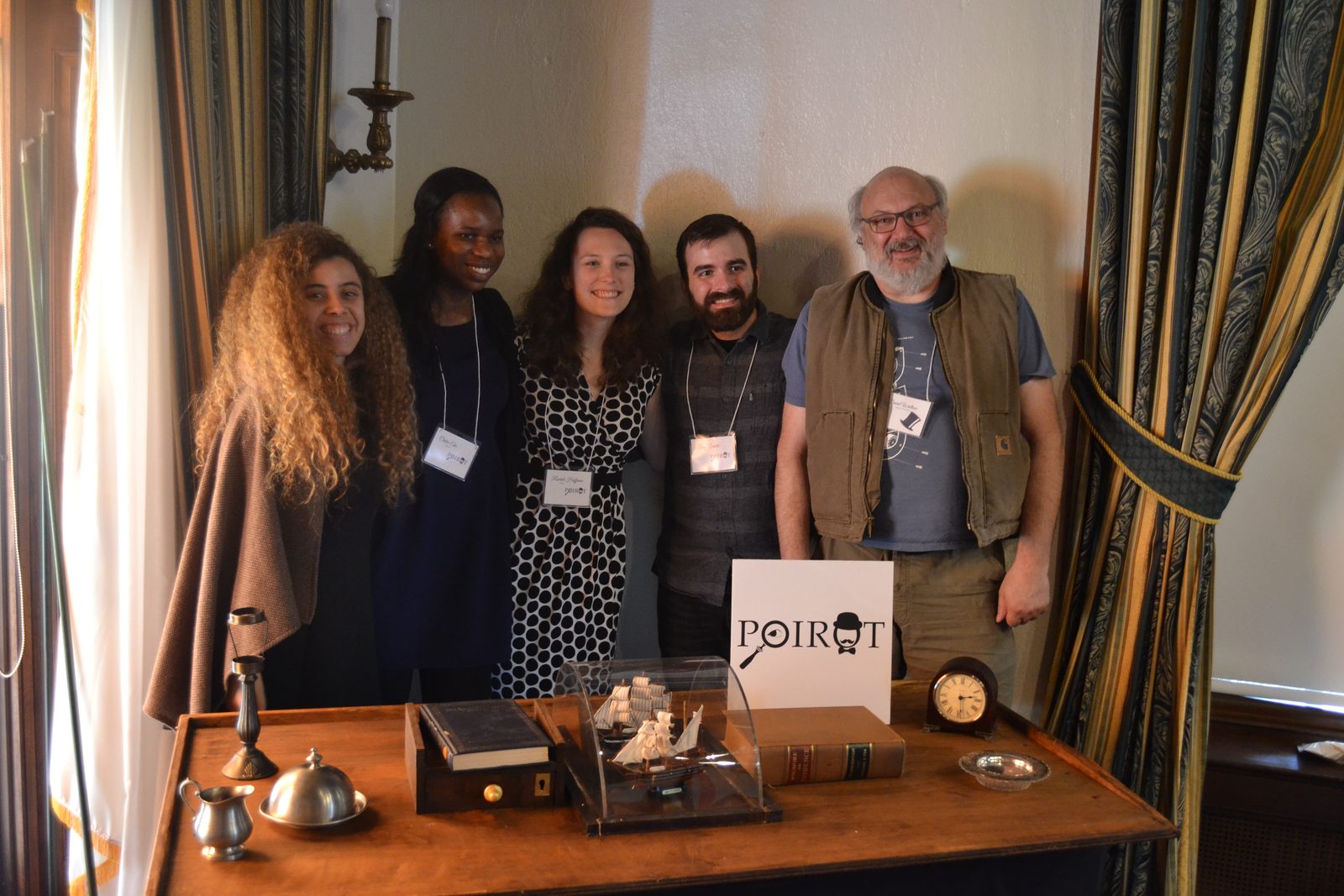
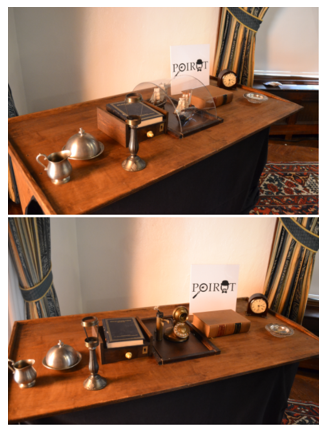
An 1800s writing desk that changes on cue. At the right moment in a live-action adventure, its top rotates and swaps one set of props for another — revealing the clue that tells the team how to escape the room.
The brief
Our client was 5 Wits, a company that builds live-action adventure venues where a group walks into a themed room and has to solve their way out. We were designing an effect for their “Mystery Manor” adventure, set in a mansion in the late 1800s. The effect had to act as a clue: at the right moment in the story, a writing desk would change, revealing the prop that tells the team how to escape.
The hard constraints came from the venue, not from the physics. It had to survive being triggered dozens of times a day by paying customers, it had to look like period furniture and not like a machine, and it had to read clearly as magic from across a dim room — which meant the transition needed to be fast and the mechanism needed to be invisible.
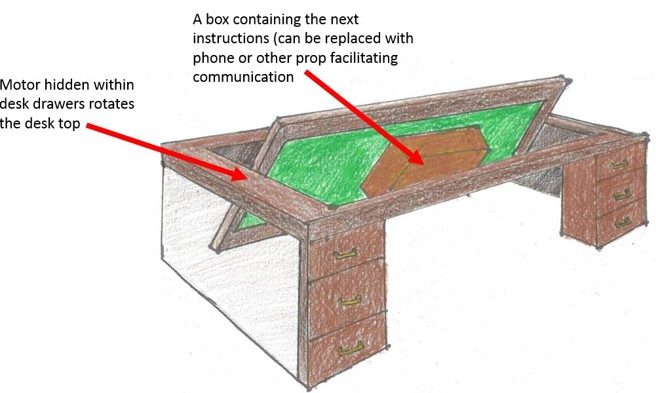
Sketch modeling
Most of the semester was spent building rough physical models rather than drawings. The point of a sketch model is to answer one question fast and then get thrown away, and this class was where I got comfortable doing that instead of over-refining a CAD model before testing anything.

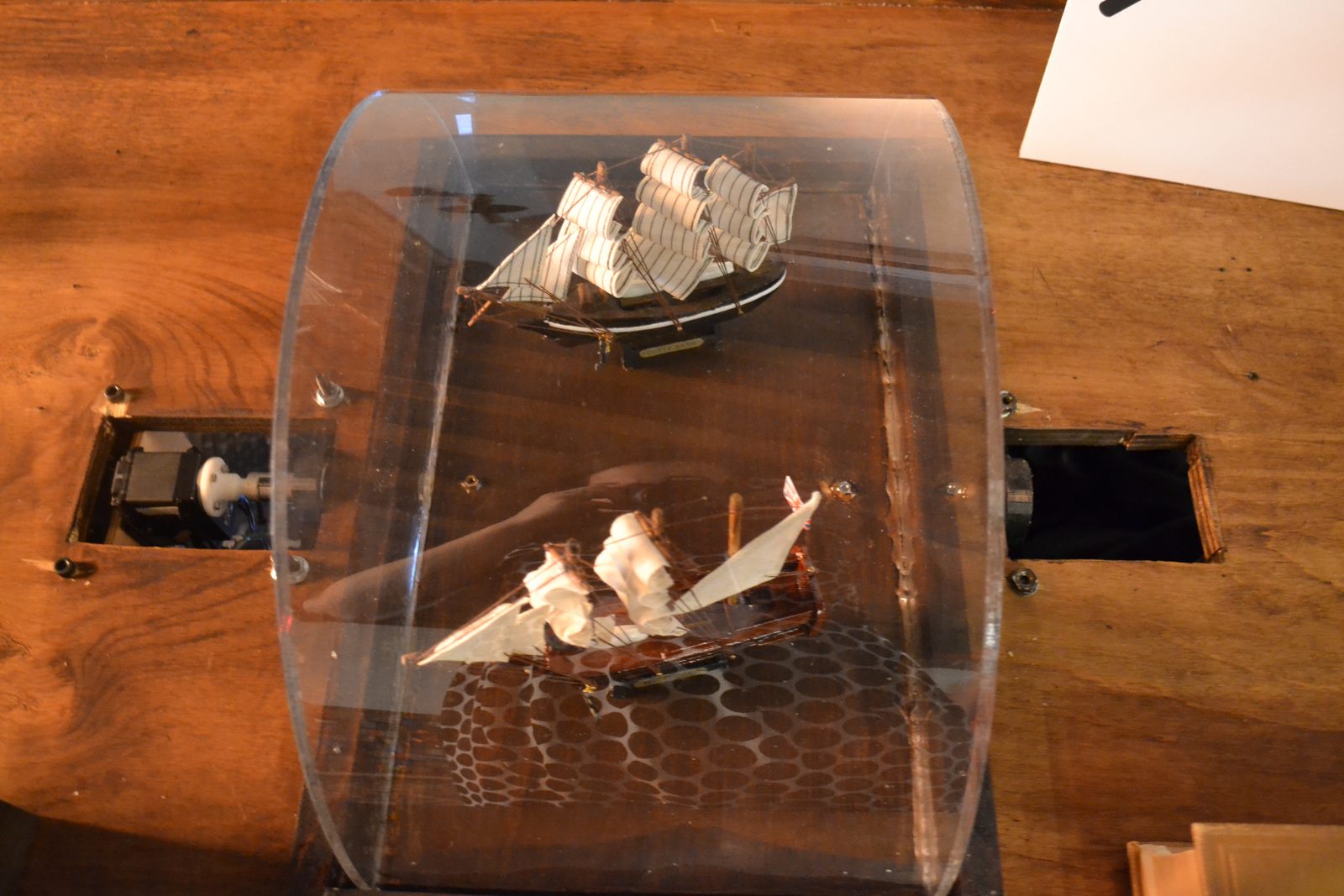
We tried the reveal several ways — a shelf that rotates, a surface that slides, a panel that flips — before settling on rotating the desktop itself about its long axis, so that the underside of the desk becomes the new top.
The mechanism
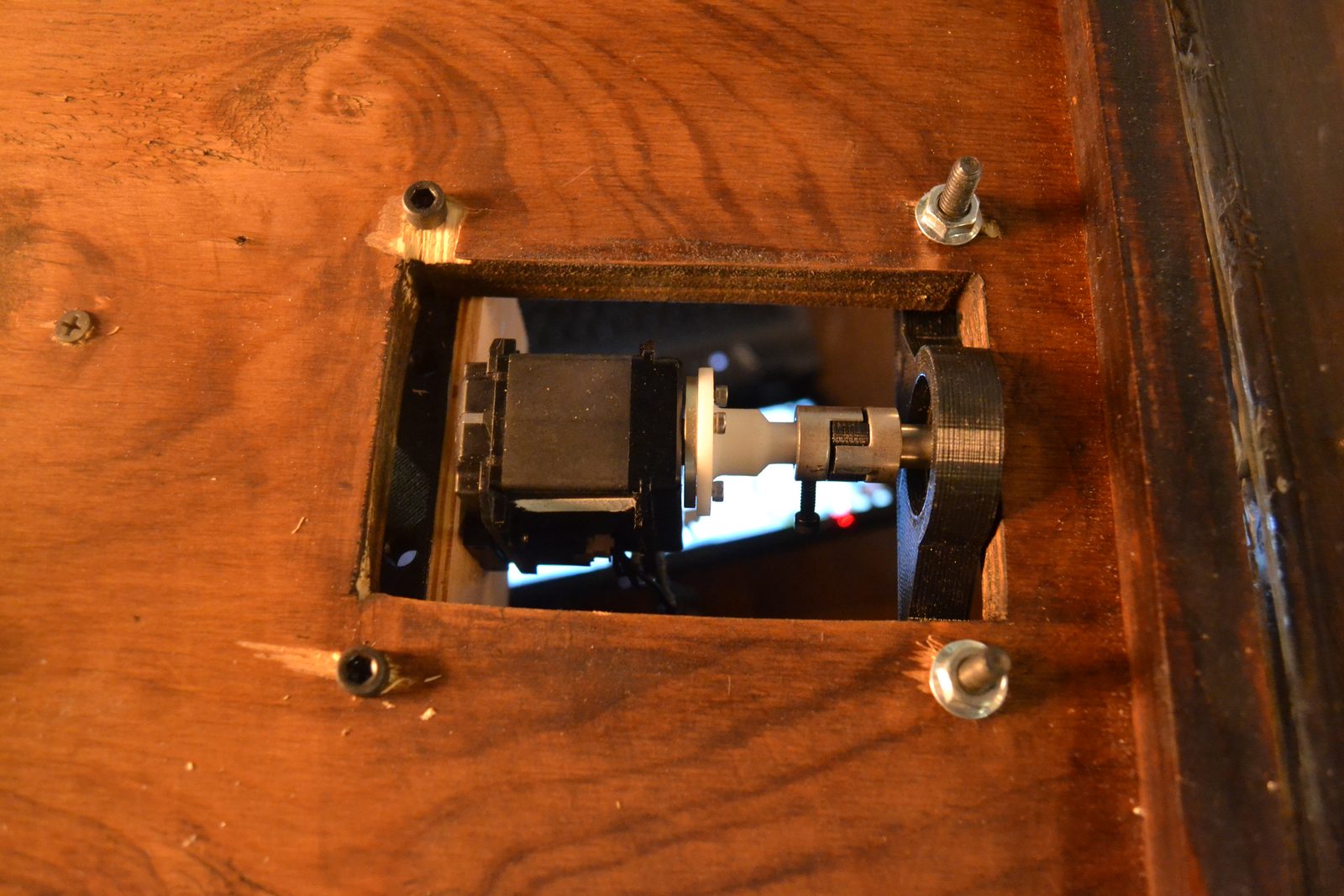
A stepper motor mounted inside the desk pedestal drives the tabletop shaft through a flexible coupler. Hiding the entire drive inside the existing drawer volume was the constraint that shaped the whole design: nothing could protrude, and the desk had to still read as furniture with the effect at rest.
What I took from it
This was the first design course I took where “is it correct?” was the wrong question and “does it land for the person in the room?” was the right one. The user-centered process and the habit of sketch modeling — build the cheap version, learn one thing, move on — carried directly into how I approach medical device work, where the person holding the device matters at least as much as the mechanism inside it.